
Wonder International Hospitals is a duly registered humanitarian venture under the umbrella of the Cosmopolitan Aid Foundation (CAF), an NGO. It is strategically formed to empower healthcare delivery, assuring patients that specialists, diagnostic and therapeutic tools will be made available to them for the first time in Ghana and the West African sub-region, improving their health and saving the lives of millions of people.
It was registered in Ghana on 20th February 2014 at the Registrar-General's Department in Accra with the registration number BN587612014.
The world-class healthcare provider will be offering services to citizens of Ghana and the Economic Community of West African States (ECOWAS), with an estimated population of 441.3 million people.
For the first time in our sub-region, we will build a 200-bed, smart quaternary multispecialty, teaching and referral hospital with the aim of servicing local and international clients drawn from all over the world.
This will be the first time ever a project of its type is launched in Ghana and West Africa, and it is expected to emerge as the health tourism facility in the sub-region. There is a shortage of over 70,000 hospital beds in Ghana as of 2023. Until now, the major government hospitals in the sub-region are better equipped both in gadgets and human resources to handle a variety and severity of conditions that the private hospitals, in their deficit, refer the patients to. As a result of this, the wealthy and the influential are flocking abroad to solve their health issues. Some who are middle-class members of society or are sponsored by the wealthy to go abroad do complain about the additional air ticket that needs to be paid for themselves and their families to India and South Africa. Let us not talk about Europe and North America, where the cost of healthcare is exorbitant if you don’t carry good international health insurance. Foreign health tourism does not allow patients to recover in the emotional company of their family members and friends. Corporate organisations and government agencies are increasingly covering their workers with health insurance, and we could positively tap into that for the sustainability of revenue. In the private sector, we shall not have parallel competitors if our product strives to be affordably competitive.
This proposal seeks to achieve extraordinary improvements in human health by providing all the specialties and specialists, all the latest equipment, a complete clinical and pathology laboratory, image diagnostic services, Critical Care Units for different purposes, and a well-supplied pharmacy. With your collaboration, we seek to provide quality healthcare that will make a difference by improving the health of the people of Ghana and Africa at large.
The Cosmopolitan Aid Foundation will reach out to humanitarian organisations, corporate bodies, and philanthropists for funding to create a safety net purse to accommodate the marginalised of our society who cannot pay their medical bills to get equal access to our medical facility. In this way, they will not be excluded from this huge innovative medical impact to favour everybody in our society.
The hospital shall host the latest medical diagnostics equipment with cutting-edge technology, globally acclaimed medical specialists, and is envisioned to cater for local and international clients in the ECOWAS region and beyond. The hospital envisions seeking global accreditation with organisations such as the International Standardization Organization (ISO) and Joint Commission International (JCI).
The hospital shall be located in the International Airport City in Accra, the capital of Ghana – an area resident to over 55% of top medical professionals in Ghana. This is phase 1 of the project of the first medical city in West Africa, The Wonder Medical City, which is going to sit on a 30-acre land. After this phase, an apart-hotel (for relatives of patients, researchers, and those who will attend conferences), a medical school with a solid research institute, a neuroscience centre of excellence, a medical mall (a diagnostic centre and a well-stocked pharmacy, outpatient clinic and a day surgery centre, dental care and physiotherapy centre), a pharmaceutical centre, and a Science, Technology, Engineering, Arts and Mathematics (STEAM) school are to follow in subsequent successive phases.
This comprehensive approach will further enhance healthcare delivery and medical education in the region. The majority of students who intend to get admitted with high academic performance but cannot afford their fees will be granted scholarships by generous foundations like yours, where the student pledges a 5-year commitment to serve as a primary care physician in an underserved part of Ghana. We will run an undergraduate programme through the establishment of an academic department of family medicine in the medical school. Ghana is expected to have 34,122 primary care physicians. Our total population of doctors in Ghana is 4,777. Out of them, only a few are primary care physicians. The WHO estimates that at least 2.5 medical staff (physicians, nurses, and midwives) per 1,000 people are needed to provide adequate coverage with primary care interventions (WHO, World Health Report 2006). We need at least 29,344 primary care physicians at this time.
As we embark on this transformative journey, we recognise the immense potential for replication across the African continent. With the exception of South Africa, healthcare delivery in most African countries operates at the lowest levels globally. However, the payment capacity of individuals in these countries is increasing as economies develop and enter the lower middle-class range. African economies are among the fastest-growing in the world, and the continent is poised to transform the global economic landscape. By extending our reach to the entire continent, we can contribute to the improvement of healthcare systems and ultimately save countless lives.
With your support, we will together be accomplishing the UN Sustainable Development Goals, which make a bold commitment to end the epidemics of AIDS, tuberculosis, malaria, and other communicable diseases by 2030. The aim is to achieve universal health coverage and provide access to safe and affordable medicines and vaccines for all.
The Board of Directors of Wonder International Hospitals, led by Dr Emmanuel Yao Voado, MD, the Founder, with the astute collaboration of your organisation, will select the Management Committee that will see to the day-to-day administration of the hospital.
We are proposing to your organisation to have a joint venture with us to help solve the deficiencies in healthcare delivery not only in Ghana but also in Africa as a whole.
With this collaboration, your organisation will leave a legacy and be remembered in the annals of history for the good they have done to elevate the quality of healthcare in Ghana and Africa as a whole.
Ghana is located in West Africa and borders Burkina Faso, Côte d’Ivoire, and Togo, occupying a total area of 238,533 square kilometers. Ghana’s population is estimated at approximately 34.8 million people, with projections indicating it will reach around 35 million by 2025.
The population of West Africa is estimated at about 468 million people as of 2025, making it one of the most populous and fastest-growing regions in the world.
Ghana, like many African countries, still faces significant public health challenges. The life expectancy at birth is approximately 65–66 years as of 2025, reflecting gradual improvements over previous decades but remaining lower than the global average. The leading causes of death, as per the World Health Organization, are highlighted below:

Figure 2 Leading Causes of Death- Ghana (Courtesy WHO Data)
Based on this data, it is therefore critical for the region to invest in advanced medical diagnostic equipment and attract top specialists to address these leading causes of death in the country and the sub-region. Ghana, like many African countries in the ECOWAS region and indeed Sub-Saharan Africa, often sees its citizens travelling to other destinations to seek advanced medical interventions. Among the leading destinations for “Medical Tourism” are South Africa, India, and Turkey. The following factors have been identified as driving these trends:
1. Affordability – Most advanced medical services in India are fairly affordable compared to other destinations such as the United States and the UK. This cost-effectiveness is a significant factor in attracting medical tourists.
2. Accessibility – Accessibility to the latest technologies such as CyberKnife robotic surgery and TomoTherapy is a key advantage. These cutting-edge technologies provide advanced treatment options that are not readily available in many other regions.
3. Accreditation – India boasts a large network of hospitals accredited by prestigious organisations such as the Joint Commission International (JCI), the National Accreditation Board for Hospitals & Healthcare Providers (NABH), and ISO. These accreditations ensure high standards of care and patient safety.
4. Ease of Travel/Visa – Medical treatment visas are issued at reputable hospitals in India, making travel for patients seamless. This streamlined process reduces the hassle and stress associated with international travel for medical purposes.
5. Immediate Medical Attention – There are no wait times for complex surgeries, unlike in many hospitals in Africa and other Western countries. This prompt attention is crucial for patients requiring urgent medical interventions.
These enablers shall form the core of operations at Wonder International Hospitals, ensuring that we provide affordable, accessible, and high-quality medical care with minimal wait times. By incorporating these principles, we aim to position Wonder International Hospitals as a leading destination for medical care in the region, attracting patients from across Africa and beyond.
Dr Emmanuel Yao Voado, MD – Founder & CEO, Wonder Medical City:
Dr Emmanuel Yao Voado, the founder and CEO of Wonder Medical City and Cosmopolitan Aid Foundation, boasts decades of cutting-edge experience in the medical field. Born in 1971 to a Christian family of scarce resources in Tefle, Volta Region, Ghana, he always dreamed of breaking the backbone of poverty through education. At the age of 12, he received a prophecy that he would go abroad to further his education. In 1985, at age 14, the prophecy was fulfilled, but not without difficulties. After taking the exams to send students to Cuba, he placed first in his municipality but was unlawfully replaced by the son of the most powerful politician there. A concerned citizen sent him to the office of the late President Jerry John Rawlings, where he was allowed to participate in the national test, in which he placed first.
Dr Voado studied in Cuba for 17 years, right from Junior High School to becoming a medical doctor 29 years ago and a neurosurgeon 25 years ago. During his years of education, he was always summa cum laude. He wrote a book on Organic Chemistry at the end of Senior High School in Cuba, where he topped all the Chemistry quizzes among 36 countries. At the end of his neurosurgical training in Cuba, he again wrote a book in the field of Spinal Surgery called Lumbar Discopathies.
Upon completion of the neurosurgical course in 2001, Dr Voado was invited to work in Belize as the first-ever local neurosurgeon of that country for a period of 5 years, during which there were no surgical mortality cases reported under his watch. Notable in his repertoire in Belize were spinal microscopic surgeries performed on the longest-serving Prime Minister of Belize and the daughter of the Father of the Nation of Belize.
His current endeavour is to make discoveries in the field of neurosurgery that will change the prognosis of conditions such as spinal cord and brain injuries, brain tumours, and spinal degenerative disc diseases.
It is worth noting that Dr Voado, under the tutelage of Dr Robert Grossman (a renowned neurosurgeon), served as a Clinical Research Specialist, writing several research papers that were presented at the international conferences of the Congress of Neurological Surgeons of America.
In Ghana, he co-led the team which separated the Bansah conjoined twins and is part of the team that executes many groundbreaking surgeries in West Africa. Among them are the most talked-about awake brain surgeries.
He was deeply touched by the spirit of selflessness of the Cubans and Americans, and this shaped his worldview at a subconscious level until he came to the conscious realisation that a meaningful life is not about being rich, being popular, being highly educated, or being perfect. It is about being real, being humble, being able to share ourselves and touch the lives of others. It is only then that we can have a full, happy, and contented life. He came home to give back to his people in the field of neurological surgery and through philanthropic efforts to help alleviate the problems of the helpless, the destitute, the orphans and vulnerable children, the widows and their children, the elderly, the mentally disabled, the physically disabled including the deaf and the blind, students, patients, and the public at large through the Cosmopolitan Aid Foundation (a non-profit organisation).
With the booming economy, healthcare delivery, which is one of the faces of economic growth, needs to improve in Ghana. When those who have the resources need medical care, they go to South Africa, Cuba, America, and other developed nations because there is no facility in the West African sub-region that offers an appreciable level of quality healthcare.
Considered a regional model for political and economic reform, Ghana has to appear as a flag bearer of healthcare delivery not only for its people but also for West Africa, as many patients from the sub-region flock to Ghana looking for better medical care. Meanwhile, Ghana itself does not have facilities like those in developed countries and countries with emerging economies.
Why the need for a Medical City? Not simply because our West African neighbours still come to Ghana for medical care, but also because we sustain the vision of having our medical city used by patients beyond the borders of Africa.
The leading government hospitals in the West African sub-region are not fully equipped. In the areas in which they are well-equipped, maintenance of equipment is problematic. This is because maintenance is not done in a timely manner, as funds have not been reserved during the exploitation of this equipment for their consequent repair if a breakdown should happen eventually, or simply because there are no government funds available at that moment to carry out the maintenance/repair. We lack some specialties and medical equipment, which will ultimately prevent the flock of patients abroad. The efforts of having a strategic plan for training human resources, especially general medical practitioners, specialists, nurses, and other allied health workers at home or abroad for the challenges the health sector is facing or will face in the short term or long term, have not yet yielded the expected outcomes. A sustained plan of training the adequate quality and quantity of the new generation that will take the baton when the current generation is gone does not seem to be yielding the expected results.
Because of the inadequate attention to preventive medicine, all the government hospitals are choked with patients. In this atmosphere, only the well-connected and economically solvent get access to swift medical care in both the out-patient department and the usual 18-month long queues for elective surgery. The fact is that many of them will suffer from prolonged pain and/or die waiting.
Having all our healthcare needs locally is the only way we can stop the efflux of the rich abroad for better healthcare when they are also dying in their numbers if it is an emergency condition that does not allow for a sufficient waiting period for its transfer outside the country.
We do not have local experts on the diagnosis and treatment of brain aneurysms, which is an emergency condition that continues to claim the lives of many in this country. A patient who needs complex spinal surgery to avoid or improve the condition of paralysis due to a spinal cord injury is in a similar situation because, whether the person can pay or cannot pay, there is no amount of money that can save their life since emergency treatment is not available in the country.
Some of our medical practices in Ghana need to catch up with the times. For example, in the field of Spine Surgery, the technique of laminectomy, which was used to treat lumbar disc herniations in the 1960s, is still used in Ghana today due to deeply rooted paradigms, leaving patients not only with big scars on the back but also with unnecessary destruction of the bony structures that guarantee stability to the spine, apart from a longer stay at the hospital.
The agents of change are coming into the system every year after undergoing training in developed countries, but they are either absorbed by the status quo or they are marginalised to health facilities where they do not have the tools to effect those changes for the benefit of the people. They end up giving in to the status quo, so the teaching hospitals do not always experience the changes that the new brains coming into the system could bring.
We still lack some medical services in Ghana after 66 years of independence. This is because of ineffective strategic planning, particularly for the training of specialists in the fields where there are deficits. There appears to be a lack of commitment to insert those new specialists into the system after their training in terms of giving them practical support, like getting ready the equipment they need to work on their return to the country and the necessary basic incentives. When this happens, the danger is that there is a brain drain back to the developed countries where they were trained. The common denominator of the private hospitals in Ghana is that they are poorly equipped. They do not have the latest radiological and pathological investigations/equipment, and many of them lack well-supplied pharmacies. All of them lack Critical Care Units. As a result of this, we see patients moving from one facility to another trying to complete an investigation for diagnosis before their doctors are able to treat them. Once the final treatment is prescribed, they have to move around the city looking for the medication.
Some of the pathology samples have to be sent abroad for analysis. Some surgical treatments have to be done abroad because of a lack of equipment and/or a lack of trained personnel to execute them.
This will be the first time ever that a project of its type is launched in Ghana and West Africa, and it is expected to emerge as the health tourism facility in the sub-region. Till now, the major government hospitals in the sub-region are better equipped both in gadgets and human resources to handle a variety and severity of conditions than the private hospitals. The private hospitals rather refer patients to the major government hospitals. As a result of this, the wealthy and the influential are flocking abroad to solve their health issues. Some who are middle-class members of society or are sponsored by the wealthy to go abroad do complain about the additional air ticket that needs to be paid for themselves and their families to India and South Africa. Let us not talk about Europe and North America, where the cost of healthcare is exorbitant if you don’t carry good international private health insurance. Foreign health tourism does not allow patients to recover in the emotional company of their family members and friends. Corporate organisations and government agencies are increasingly covering their workers with health insurance, and we could positively tap into that for the sustainability of revenue. In the private sector, we shall not have parallel competitors if our product strives to be affordably competitive.
Though the economy of Ghana has faced a bit of challenges over the past few years, the situation is now stabilising. Ghana's economy has gone through a period of economic difficulties over the past year. As stated by the IMF, "The combination of large external shocks, including COVID-19 and the war in Ukraine, precipitated a deep economic and financial crisis in Ghana.”
As a result of the economic challenges, Ghana engaged the IMF in July 2022 for a Balance of Payment (BoP) support to enable Ghana to navigate the economic difficulties. After reaching a Staff Level Agreement with the IMF in December 2022, subject to debt restructuring, Ghana is currently receiving an IMF board-level approval for a US$3 billion Extended Credit Facility.
Prior to the IMF's board approval, a number of Ghana's macroeconomic indicators have shown signs of improvement, manifested in four months of consecutive decline in inflation, a stable currency in the last three months, and a decline in interest rates. This has already been reflected in the prices of the Investment Schemes.
We hold the view that the IMF deal could help accelerate Ghana's economic recovery and support the recovery of bond prices and thus the market value of the Investment Schemes.
Investors are urged to continue to remain calm in these times and stay true to their investment plan as Ghana embarks on this journey of economic recovery.
Remember that whether we are in times of peace and prosperity, in times of war, in times of economic meltdown, or in times of pandemics, there is always the need for healthcare services as people continue to fall ill, and humankind and their loved ones will always do what it takes to recover their health by patronising health facilities. Individuals and their loved ones will do all it takes to prioritise and guarantee the reestablishment of their state of health, independent of the prevailing financial limitations of the time.
The foreign personnel who live and work here and those on short visits to the region need specialised healthcare facilities at the height of the developed countries to live/travel peacefully so that they do not die due to those emergency conditions whose treatment does not wait for the long process of referral to specialised centres in the developed countries.
Dangerous conditions like the Coronavirus, Lassa Fever, Monkeypox, and Ebola Virus Disease are emerging and have threatened to invade the world, and if we do not have first-class health facilities, not only the poor people of Africa will die but also the foreign aides, tourists, and visitors who travel to our region to help in our socioeconomic development or simply for cultural exchange.

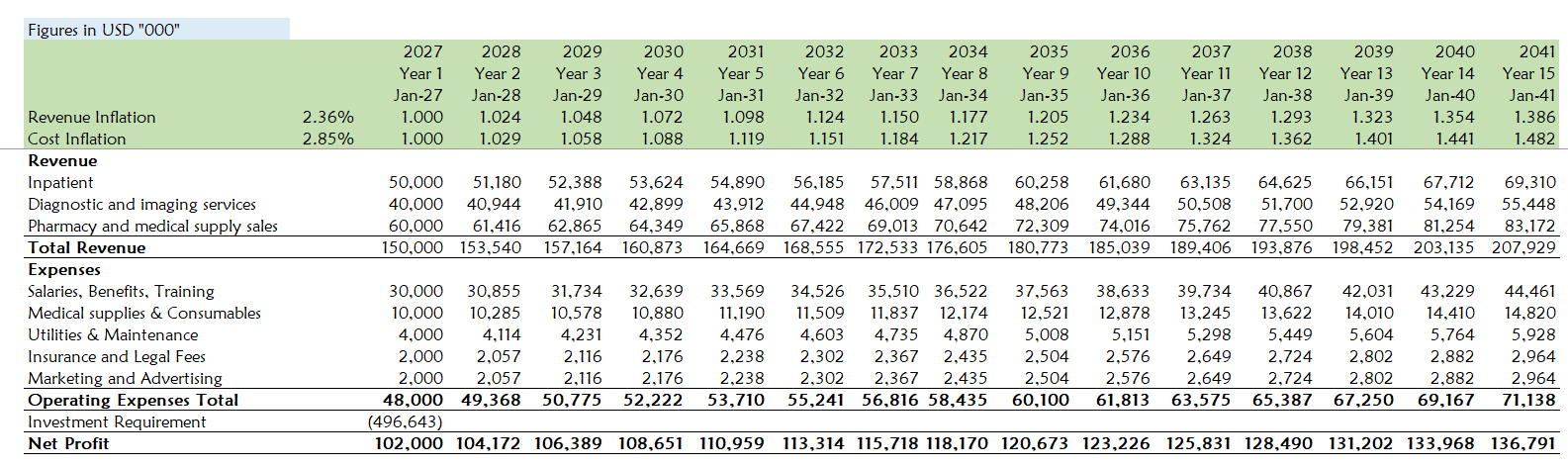
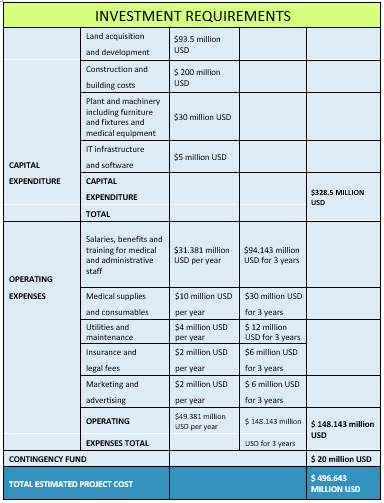
The detailed financial analysis of the envisaged expansion shows that the project will require a capital injection of $679.8 million USD ($688.569 million USD with the inflation cost) in phased development over a period of 2 years. The detailed financial analysis of the project, based on the various assumptions annexed in the detailed financial report, shows a project break-even period of 5 years, with an Equity IRR of over 21%; a decent return on investment.
The project's financials have been developed with the following high-level assumptions:
- Equity injection for the construction of a 200-bed hospital beginning in January 2025
- Non-loan payment
The project is proposed to be completed in one phase with a construction period of two years, with the following high-level metrics:
- NPV of $ 3.1 Billion (n = 15 years)
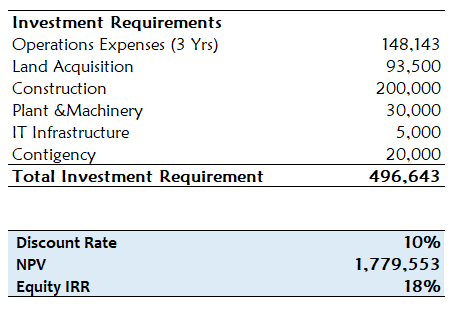
- Positive Equity IRR of 24 %, against and investment of $496.643 Million
Our smart quaternary supra specialist international hospital plans to roll out the following marque services:
| The new hospital in the delivery of its expanded services shall deploy the following cutting-edge technologies: | ||

MRIdian by ViewRay is the world’s first radiotherapy device with an integrated onboard MRI. It allows the treatment of tumors previously considered untreatable. |

CyberKnife is an advanced technology for non-invasive, painless radiosurgery that offers sub-millimeter precision in the treatment of cancer anywhere in the body. |

Gamma Knife Icon is the sixth generation of Leksell Gamma Knife technology, which has evolved for more than 60 years. It is the most accurate, flexible, and safe of the Leksell Gamma Knife family. |

TrueBeam STx, which incorporates advanced radiotherapy techniques used in cancer treatment, such as IMRT, IGRT, gated RT, RapidArc, SRS, and SBRT, offers fast, precise radiation delivery to small tumors. |

The da Vinci Robot Surgical System is an advanced robotic platform designed to expand the surgeon’s capabilities and offer an option to open surgery. |

The intraoperative 3 Tesla MRI produces faster and higher resolution data during brain surgery and allows the complete surgical removal of brain tumors. |

Nuclear Medicine Department deals with the use of radioactive materials in small quantities for the diagnosis and treatment of diseases and monitors the distribution of these materials in the body. |

The whole-body magnetic resonance imaging (MRI) device is one of the most important diagnostic devices among the MRI technologies available today. The device allows for the completion of a whole-body scan in just 45 minutes and thereby facilitates the detection of suspicious masses at an early stage before symptoms of several disease are apparent. |
|
| As a Long-term growth strategy, the hospital will develop other outreach clinics in various suburbs of major towns in Ghana: | ||
 Figure 11 Cancer Treatment (Oncology) |
 Figure 12 Prostate Cancer |
 Figure 13 Colon Cancer Treatment |
 Figure 14 Orthopedics & Sports Medicine |
 Figure 15 Plastic Surgery |
 Figure 16 Robotic Surgery |
 Figure 17 Kidney Transplantation |
 Figure 18 Liver Transplantation |
 Figure 19 Bone Murrow Transplantation & Cellular Therapy |
 Figure 20 Chest (Thoracic) Surgery |
 Figure 21 ENT (Ear, Nose & Throat) |
 Figure 22 Obesity Center & Bariatric Surgery |
 Figure 23 Eye Center |
 Figure 24 General Surgery |
 Figure 25 Gastroenterology |
 Figure 26 Hair Transplant Center |
 Figure 27 Spine Center |
 Figure 28 Cardiology & Cardiac Procedures |
 Figure 29 Health Checkup |
 Figure 30 Pediatric Cardiology & Cardiovascular Surgery |
 Figure 31 Breast Cancer |
 Figure 32 Neurology & Neurosurgery |
 Figure 33 IVF Treatment (In Vitro Fertilization) |
 Figure 34 Varicose Veins Treatment |
 Figure 35 Life Club Health Management Program - Check-Up & Follow-Up |
||
The envisioned Smart Hospital shall be strategically located in Ghana, near the international airport, to serve the ECOWAS region's population of 449 million people. It will operate above the standard of any existing hospital in West Africa, whether public or private.
The hospital has made a strategic decision to develop a facility that sets itself apart by taking the following into consideration:
1. The hospital shall be located in Airport City, near the international airport in Accra, the capital city of Ghana.
2. The hospital must be easily accessible by road and air.
3. The hospital must have high-end diagnostic and surgical equipment with exceptionally experienced personnel.
4. The hospital must offer all services that fit a quaternary hospital’s classification.
The Hospital shall have the following Units:
| 1. Administration Unit
2. Admissions Unit & Discharge 3. Birthing Unit 4. Cardiac Investigation Unit 5. Catering Unit 6. Health Information Management Unit 7. Community Health Unit 8. Complementary and Alternative Medicine Centre 9. Coronary Care Unit 10. Day Surgery/ Procedure Unit 11. Dental Surgery Unit 12. Emergency Medicine Unit 13. Endoscopy Unit 14. Engineering & Maintenance Unit 15. Housekeeping Unit 16. Inpatient Unit - Bariatric 17. Inpatient Unit - General 18. Intensive Care Unit - General 19. IVF Unit (Fertilization Centers) 20. Laboratory Unit 21. Linen Handling Unit 22. Main Entrance Unit 23. Maternity Unit 24. Medical Imaging Unit - General 25. Medical Imaging - Nuclear Medicine Unit 26. Medical Imaging - Nuclear Medicine Unit - PET 27. Mental Health Unit - Adult 28. Mental Health Unit - Child & Adolescent 29. Mental Health Unit - Older Persons 30. Mobile Healthcare Unit |
31. Mortuary - General
32. Oncology Unit - Medical (Chemotherapy) 33. Oncology Unit - Radiation 34. Operating Unit 35. Outpatients Unit 36. Pharmacy Unit 37. Public & Staff Amenities 38. Rehabilitation - Allied Health Unit 39. Sterile Supply Unit (SSU) 40. Supply Unit 41. Waste Management Unit 42. Neuroscience Unit 43. Orthopedic Surgery Unit 44. Gastroenterology and Hepatology Unit 45. Endocrinology Unit 46. Dermatology Unit 47. Nephrology and Hypertension Unit 48. Ophthalmology Unit 49. Otorhinolaryngology (ENT) Unit 50. Urology Unit 51. Pediatrics Unit 52. Anesthesiology Unit 53. Internal Medicine Unit 54. General Surgery Unit 55. Transplantation Unit 56. Plastic Surgery Unit 57. Health Sciences Research Unit 58. Nutrition and Dietetics Unit 59. Social Work Unit 60. Chaplain Services Unit |
- Due to the virgin site on which the primary facility is to be located, Wonder International Hospitals will leverage the local climate for natural ventilation. Air conditioning will also be available so that our clients can make their choice.
- The hospital shall promote the wellness concept and healing environments through landscaping and courtyards.
- We will leverage the use of exterior covered areas to provide additional waiting areas for families accompanying patients.
- Balconies must have strict patient safety, security, and insect control measures.
- Finishes should reflect the culture and social environment of Ghana and the West African sub-region.
- Dual plumbing fixtures will enable the company to use reclaimed water for certain purposes, such as landscaping or flushing toilets.
- "Fins" on the exterior façade will allow light to enter while blocking the most intense sunshine, helping to keep interior temperatures stable and reducing the energy required for heating and cooling.
- Submeters will be installed on nearly every level imaginable, with multiple meter points in the "Brain" that facilities managers can use to monitor both electricity and water usage.
- A hybrid system will include water-cooled chillers and air-source heat pumps; the latter have an efficiency of 300 per cent, compared to 90 per cent for typical hot water boilers.
- This hospital will have dual plumbing systems to support grey water recycling and rainwater harvesting for use in irrigation and fire-fighting.
- Through our Air-to-Water application, we will harvest water by combining atmospheric humidity, heat, and airflow, producing 40,000 litres per unit per day. Rainmaker's Air-to-Water units produce drinking water from air, requiring no other water source.
- Solar water heating will be achieved using rooftop-mounted panels.
- Solid waste management will include the segregation of recyclable material from organic and biohazardous waste.
- The arrival experience needs special consideration. Entry, public, and patient spaces need to portray a sense of comfort and be welcoming to patients and their families.
- Expedient ambulance arrivals should be built into the design.
- Separate entrances for Accident & Emergency, clinics, and the private wing should be considered.
- Site perimeters and the hospital will have robust security designed to be as unobtrusive as possible.
- Careful attention and controls with CCTV should be implemented for all entrances and parking areas.
- Radio frequency monitoring of infants shall be enabled.
- The hospital will be fully enabled in every area with robust connectivity and communications systems—there shall not be any "blind zones."
- Audio-visual connectivity shall be available in all seminar rooms as well as the lecture theatre.
- The use of CCTV, telemetry (remote patient monitoring), and interactive patient systems (e.g. nurse call system) shall be enabled. Separate entrances for Accident & Emergency, clinics, and the private wing will be considered in the actual construction of the hospital.
Modern information technology has developed dramatically over the last two decades and introduced new methods to medicine. The use of IT (IoT) in healthcare will increase and develop significantly over the next 10-15 years. The design of Wonder International Hospitals is, therefore, an excellent opportunity to take advantage of this development and design a comprehensive system based on the most advanced technology available.
The ultimate vision is to create a paperless hospital. There should be computer access throughout the hospital, and all employees must be able to access all information from any computer or device, wherever they are in the hospital or on location. The following are some general statements regarding the principles of a comprehensive IT system:
- All information is available at any time and in any place for authorised personnel.
- All information is entered only once at the place where it is produced.
- No data is lost, including case records, requests, laboratory reports, etc.
- All data shall be protected against unauthorised access.
- All stored information is encrypted and duplicated on backup media/cloud.
- Every patient has a single file with all documents, irrespective of administrative divisions, i.e., clinics and departments.
- A simple user interface that is easy to understand and similar for all applications.
- Easy access to a reference library with retrieval functions.
Planning, booking, and follow-up are flexible and time-based without forced connection to a set organisational structure. - Resource consumption is continuously monitored and analysed in CPP (cost-per-patient) and decision support systems.
- Abundance of hardware for data storage to cover emergency situations.
- Security and supervision routines to control access to the IT system.
- All systems are flexible to changes and open to different technical platforms.
- All actions are logged and are auditable.
- Common national and international standards are used.
Ghana has made significant political, structural, and economic reforms that have largely driven sustained economic growth, social development, and political gains over the past three decades. However, its key development challenges still include poverty, inequality, climate change, continued weak private sector investment, and the vulnerability of the economy to internal and external shocks.
The private health sector is growing rapidly in emerging market countries in general. The sector is not without its challenges. Consequently, financial institutions, which are often unfamiliar with its characteristics and dynamics, can perceive it as risky. The 2019-2022 Coronavirus pandemic disruption has forced providers to suspend, delay, and rethink their capital allocation plans, perhaps unlike any period in the past.
Below are various categories of risks that have been evaluated in the consideration of building the hospital:
According to Fitch Solutions Country Risk Tracker, Ghana has a Country Risk Index score of 50.3, indicating that the political risks are well-contained, thereby suggesting a positive environment for investment.
According to the African Development Bank assessment, the real GDP growth of Ghana slowed to 3.3% in 2022, largely due to global financial tightening and the war in Ukraine. However, all forecasts indicate that the country will rebound to a real growth rate of over 5% from 2024.
Remember that whether we are in times of peace and prosperity, times of war, times of economic meltdown, or times of pandemics, there is always a need for healthcare services as people continue to fall ill, and humankind and their loved ones will always do what it takes to recover their health by patronising health facilities. Individuals and their loved ones will do all it takes to prioritise and guarantee the reestablishment of their state of health, independent of any prevailing financial limitations. Remember that this is an investment for life that will outlast our generation.
Supply Chain & Transportation
The delivery of a medical facility of this type requires that many of the building materials (composite panels) and medical equipment need to be imported.
Relationship with Local Community and Government
The new hospital must care about the welfare of the community surrounding the project’s environment. This can create an interface with the local community.
The new facility will be developed according to all healthcare requirements in cooperation with the local authorities. Constant communication between Wonder International Hospitals and all the healthcare actors will be key at all stages, starting from the feasibility stage to the project execution phase.
Construction
During construction, there are always site unknowns, imperfections, and corrections that need to be constantly monitored and then readjusted. It is recommended that the design team coordinates all the elements in the facility through the use of Building Information Modelling (BIM). The use of BIM software can identify and resolve clash detections.
Warehouse Theft & Pilferage Control
Theft of medicines and indeed, the occurrence of all forms of retail shrinkage is global in nature; both developing and developed countries are suffering huge economic losses, and compromised patient care and safety due to the theft of medicines and other consumables. Types of medicines stolen include oncology medicines, immunosuppressant medicines, hormonal medicines, over-the-counter drugs, narcotics, opioid analgesics, intravenous cannulas, dressings, bandages, adhesives, antiseptic solutions, alcohol hand rubs, etc. Wonder International Hospitals will need to invest heavily in an ICT solution that implements new technology, as well as hire IT staff with strong analytical, cybersecurity, and investigative skills to help combat fraud.
In order to achieve its goal of becoming a Smart Quaternary Supra Specialty Teaching and Referral Hospital, focused marketing efforts must be undertaken to balance the tried and tested Kenichi Ohmae’s 3C Marketing Model – The Customer (patients and consumers of the manufacturing products), The Competition (other hospitals of the same rank and manufacturers of similar products), and The Company (Wonder International Hospitals).
Wonder International Hospital is targeting to carve a niche in the following market segments:
1. Middle to high-income households, mostly urban, seeking quality healthcare services, most of whom have corporate/private medical cover.
2. Healthcare seekers from the ECOWAS region who travel to other countries, such as India, to seek advanced medical care.
3. Tourists coming to Ghana and West Africa who need access to advanced medical services.
4. Diplomatic corps and NGOs present in the nation with private insurance coverage.
5. International patients seeking unique solutions that are only available at our hospital.
Therefore, the marketing efforts, such as product pricing, branding, etc., for the hospital services shall be focused on servicing this client base. This shall be achieved by applying renowned marketing mix models such as the 7 P’s (Product, Promotion, Pricing, Partnerships, People, Presence, and Physical Evidence).
Wonder International Hospital plans to differentiate itself in the market by offering services that are unique from the competition:
1. An ECOWAS Region Smart Quaternary Supra Specialty Teaching and Referral facility.
2. Advanced diagnostic services that will be readily available in all its Centres of Excellence.
3. Standardized seamless patient and process flows at all its facilities.
4. International industry accreditation.
5. Paperless hospital operations with advanced IT and AI systems that guarantee 100% customer satisfaction.
6. Availability of internationally accredited consultants in all spheres of medicine.
Achieve a 5% market share by targeting the over 449 million population in the ECOWAS region. As we succeed in our initial endeavor, we shall extend our reach to other significant financial cities in Ghana. From there, we will expand beyond the borders of Ghana to spread throughout the continent of Africa, where similar healthcare deficits exist.
If you are not investing in healthcare, you are missing out on the best returns in the private equity business.
The median IRR for healthcare deals done from 2011 to 2021 is 27.3%, according to a report from DealEdge, a private equity benchmarking service from Bain & Company and Cepres.
The study by Bain & Company reveals that healthcare was the best-performing asset class in private equity between 2015 and 2021 in terms of internal rate of return (IRR).
In 2022, private healthcare equity remained strong despite geopolitical tensions, inflation, slumping stock markets, and spiking interest rates.
Healthcare private equity returns have outpaced those of other industries. After healthcare, the next highest IRR was in technology (24.3%), followed by media and telecom.
1. Revenue Generation: The hospital will generate revenue through its services, including patient care, diagnostic services, pharmacy services, and other medical services. The revenue generated will be reinvested into the project to ensure its sustainability.
2. Partnerships: The hospital will form partnerships with other healthcare providers, pharmaceutical companies, and medical technology firms. These partnerships will provide additional funding and resources.
3. Government Support: The hospital will seek support from the government in the form of subsidies, tax breaks, or direct funding. This will help offset some of the costs of running the hospital.
4. Donations and Fundraising: The hospital will also engage in fundraising activities and seek donations from individuals or organizations. This will be particularly effective because the hospital will emerge as a leader in the healthcare industry in the West Africa sub-region in the area of medicine and research.
5. Cost Management: The hospital will implement cost management strategies to reduce its operating costs. This will include energy and water-saving measures. In fact, we are embarking on building a green, environmentally sustainable hospital. We will insist on the efficient use of resources made available to us by reducing waste.
6. Research and Development: The hospital will engage in research and development activities. The findings will be commercialized to generate additional revenue.
7. Training Programs: The hospital, being a teaching hospital, will offer training programs to medical students and professionals. The fees from these programs will contribute to the project's sustainability.
8. Endowments: The hospital will establish an endowment fund to ensure ongoing financial support for the hospital's operations and maintenance. The interest generated from the fund will be used to support the project, utilizing it for specific needs or to cover the costs of operations, which can help sustain our smart international quaternary teaching hospital. Our endowment fund will make consistent withdrawals from invested capital.
Endowment funds are typically funded by donations, which are tax-deductible for the donors. These donations are invested, and the returns will be used for the benefit of our hospital. The principal amount is usually kept intact, and only the income from the investment, or a part of it, is spent. This allows the fund to last indefinitely, providing a long-term source of income for the hospital.
The success of our endowment fund will consist of designing it to maximize returns while minimizing risk. We will have a capable management team overseeing the fund. This will require a considerable amount of time and effort to manage it effectively.
Our organisation is grounded on the values of Integrity, Compassion, Accountability, Respect, and Excellence (I CARE) principles.
We believe that the future of medicine depends on bringing together organisations and healthcare partners in mutually beneficial joint ventures that help them connect, integrate, and collaborate.
- With your collaboration, we seek to provide quality healthcare that will make a difference by improving the health of the people of Ghana and Africa at large. This collaboration will facilitate access to an affordable and trusted medical alternative for patients, organisations, and consumers in the African market.
- With your collaboration, we will offer world-leading, affordable, timely, high-quality, and all-inclusive surgical and non-surgical specialties, diagnostic and therapeutic tools for Ghana and Africa at large, to access best-in-class healthcare facilities.
- This collaboration will continue to create opportunities in Africa, thereby increasing market share while improving patient care.
- Increasing the revenue and profitability base of the company for future developments and sustainability.
- Impact investing is a socially conscious form of investing that seeks to generate both a social benefit and a meaningful financial return. It is an investment that intentionally generates a sound financial return as well as measurable social and environmental impact, and this would help grow the global impact economy, especially that of Ghana, significantly.
- It will help train doctors, nurses, and allied health personnel who will reduce our chronic deficit of medical personnel.
- It will not only create jobs for thousands who will be directly and indirectly involved here at home but also in your nation and all other countries where our contractors, construction materials, and medical and non-medical equipment are coming from.
- We would have all the tests done locally in Ghana, which has a population of 32.83 million, and have an influential impact on 419 million people who will come from other West African countries as they usually do.
- Patients, both foreigners and nationals, will be tremendously helped by avoiding their flock to South Africa, India, Cuba, and first-world countries.
- Your organisation will leave an indelible mark of goodwill, whose name will ever be remembered in the annals of history for the good they have done to elevate the quality of healthcare in Ghana, extending to Africa as a whole.